CRM, BI, and the Reality of Institutional Change
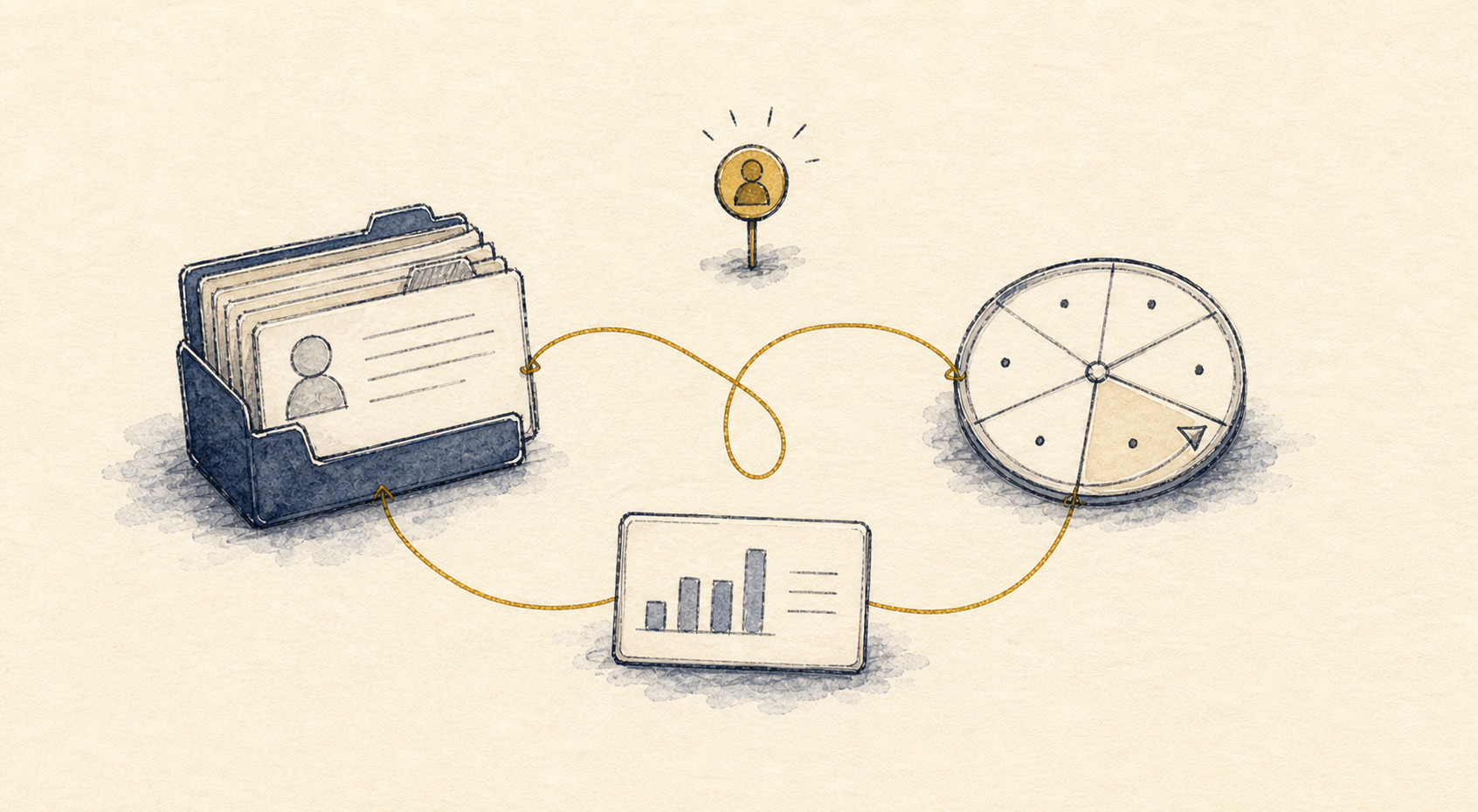
Institutional change is rarely blocked by software capability; it is blocked by workflow mismatch, role ambiguity, weak data discipline, and missing execution rituals.
Why this matters
CRM and BI projects are often sold as technology upgrades.
That is rarely the whole truth.
In large organizations, they are usually behavior-change programs wearing a software badge. The tool may be new, but the hard work is older: who updates the record, who trusts the dashboard, who changes the weekly meeting, who chases the missing data, who stops keeping a private spreadsheet because the official system is finally useful enough.
This is why good platforms still underperform.
The software can be capable and the rollout can still fail because the workflow does not fit the institution. Or because everyone agrees the data should be clean but nobody owns the cleaning. Or because the dashboard is technically correct and operationally irrelevant.
Wealth-tech teams run into the same pattern faster than they expect.
Worked example
A corporate banking team does not change behavior because a dashboard exists. It changes behavior when the dashboard becomes part of a weekly account-planning rhythm that managers actually use.
That detail sounds small. It is not.
BI without a meeting is often just a library. CRM without a usage moment becomes an archive. Data quality without an owner becomes a shared hope with a login screen.
The 2026 wealth-management technology literature keeps circling this same execution gap. Wipfli’s State of the Wealth Management Industry 2026 survey found digital customer engagement, data analytics, and automation ranking as top growth strategies, while cybersecurity, data privacy, and account management platforms are reshaping operations. MSCI reports that 95% of wealth firms expect to increase AI investment over the next three years, but only 27% believe wealth management is leading other financial-services segments in AI adoption.
That tension is the real story.
Firms want smarter systems, but many are still fighting old adoption and data problems.
| If this is missing | The system usually becomes |
|---|---|
| Clear usage moments | Optional software |
| Named data owners | A slow argument about trust |
| Managerial rhythm | A dashboard nobody opens |
| Frontline fit | Work after the work |
| Feedback loop | A rollout with no learning |
AI makes this more important, not less. An assistant that drafts follow-ups, summarizes client meetings, or recommends next actions still depends on CRM and BI foundations. If those foundations are patchy, AI just becomes a confident layer on top of a weak record.
The real test of CRM is not whether the data can be stored. It is whether the organization behaves as if the record matters.
That is the thing I wish more teams would say out loud before buying or building another system.
Limitations / not a fit
There is a danger in over-learning from institutional transformation. Big banks can turn simple problems into ceremonies. Wealth-tech teams should not import slow governance, excessive committees, or process for its own sake.
Small teams need room to improvise. Early-stage products need discovery. Local pilots can teach more than central policy.
But the opposite mistake is just as common: assuming that because the company is smaller, adoption will take care of itself.
It usually does not.
If a CRM field is important, someone has to own it. If a dashboard is important, it needs a decision attached to it. If a workflow is important, it has to survive a busy week, a skeptical user, and a client situation that does not match the demo.
Institutional change is not mainly blocked by software capability.
It is blocked by the ordinary mess of work.
Good product systems respect that mess. They do not pretend a nicer interface has made it disappear.
Sources
- Wipfli: State of the Wealth Management Industry 2026
- MSCI: Wealth Trends 2026
- Deloitte: From ambition to execution: Wealth management technology