From Banking Transformation to Wealth-Tech Product Systems
A practical translation layer from large-bank transformation programs to product systems that work in modern wealth-tech environments.
Why this matters
Large banking transformation programs and wealth-tech startups look nothing alike from the outside.
One has steering committees, vendor packs, governance forums, and a small army of people arguing about data definitions. The other has a smaller team, faster releases, and a nicer interface.
But once the product touches real client work, the same problem appears.
The system only matters if it changes operating behavior.
This is the lesson I keep carrying from banking transformation into wealth-tech product work. Launch is not adoption. A dashboard is not a habit. A workflow in a slide deck is not a workflow in the hands of an adviser, relationship manager, or operations team on a bad Tuesday.
The 2026 wealth-technology research is saying a similar thing in more formal language. Deloitte’s May 2026 wealth management technology study frames the gap as one between ambition and execution: firms want front-office enablement, AI, and better client experience, but much of the hard work still sits in core platforms, data, operating-model complexity, cybersecurity, and platform modernization.
That is the bit founders should not skip.
Worked example
A bank transformation program might spend months trying to make CRM, BI, risk, and frontline routines line up. The lesson is not that startups should copy the paperwork. Please do not.
The lesson is that software has to meet the operating rhythm.
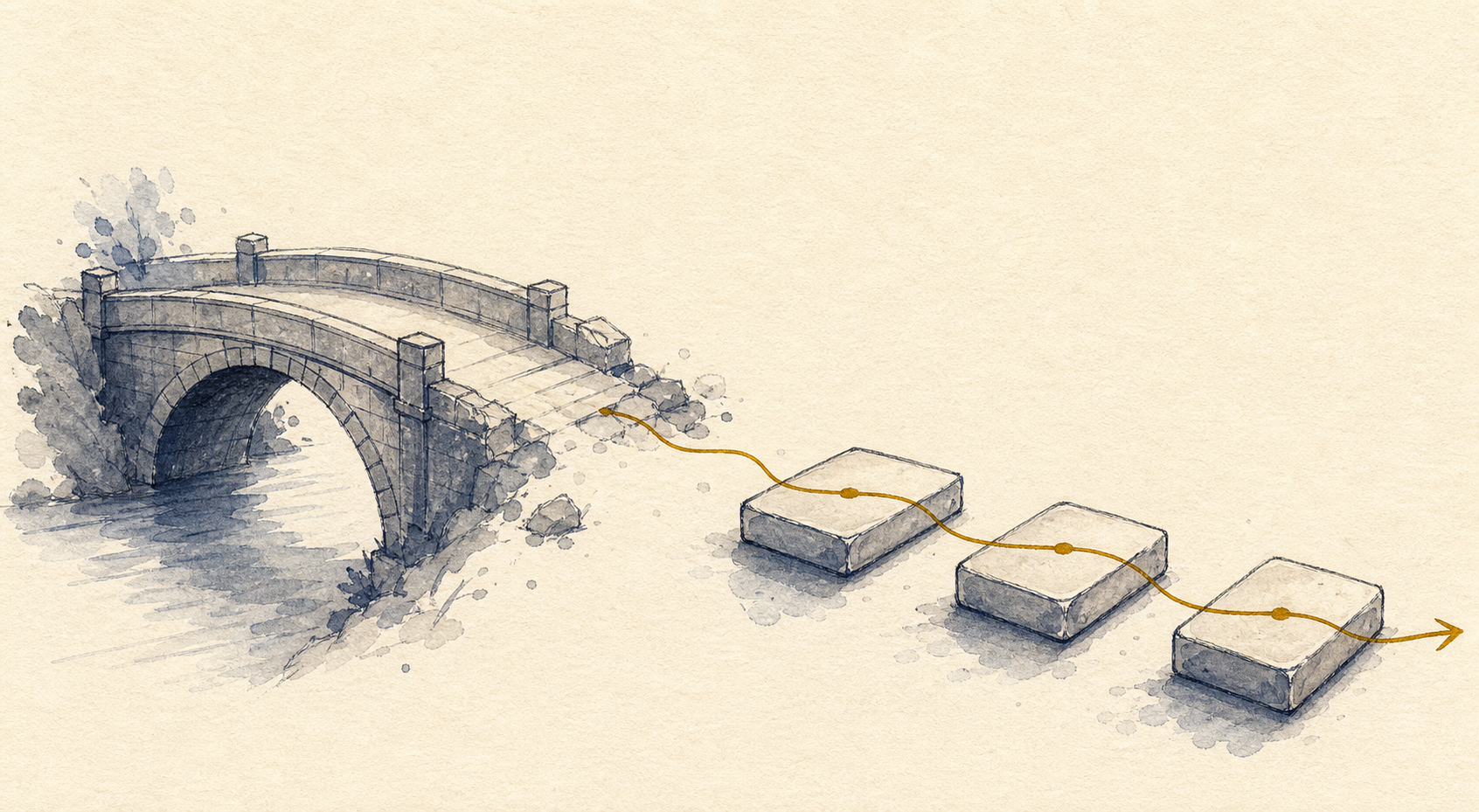
In wealth-tech, the same principle might mean starting with one adviser cohort, one client segment, and one repeatable outreach workflow rather than trying to “digitize the whole client lifecycle” in one heroic release.
| Transformation instinct | Product-system version |
|---|---|
| Launch the platform | Prove one operating loop works |
| Train everyone once | Build the workflow into the weekly rhythm |
| Report adoption after rollout | Watch actual usage moments |
| Add more features when people resist | Remove friction around the critical behavior |
BCG’s 2026 work on AI and wealth management makes the stakes sharper. Firms with unified data, modern architecture, and organizational commitment can scale AI more quickly; fragmented systems struggle to move beyond pilots. MSCI’s Wealth Trends 2026 also points to adviser priorities around scale, efficiency, personalization, and client engagement.
The interesting part is not that every firm wants AI. Everyone wants AI now.
The interesting part is that AI does not remove the operating-system problem. It makes it less forgiving. If your workflow is unclear, the agent has no stable routine to support. If ownership is vague, the automation simply moves confusion faster. If the data layer is messy, the assistant becomes a very articulate way to expose old plumbing.
Product systems are not just screens. They are decision loops with an interface attached.
That framing changes what you build first.
Instead of asking, “What features should the product include?”, ask:
- What behavior needs to happen every week?
- Who owns the next step when the system surfaces something?
- What client moment proves the workflow is useful?
- What can fail without blocking the whole process?
Those questions feel less glamorous than an AI roadmap. They are also usually closer to the truth.
Limitations / not a fit
This approach can feel slow at the beginning. It asks the team to trade breadth for controlled depth. It also means saying no to attractive feature requests that are not tied to a real operating loop yet.
There are cases where that discipline is too heavy. If a team is still searching for its first usable proposition, too much process can harden the product before the market has taught it anything. Bespoke advisory work can also resist standardization for good reasons.
But most wealth-tech teams do not fail because they lack a longer feature list.
They fail because the product never becomes part of how the organization actually works.
The useful translation from banking transformation is not the governance theatre. It is the respect for behavior, ownership, and rhythm.
Build the smallest loop that changes a real client-facing habit. Make the owner obvious. Make the fallback path clear. Then expand.
That is less exciting than a transformation slogan. It is also much harder to fake.
Sources
- Deloitte: From ambition to execution: Wealth management technology
- BCG: AI and the Future Economics of Wealth Management
- MSCI: Wealth Trends 2026