Designing Client Engagement Systems That Actually Get Used
Engagement systems work when they are operationally lightweight, behaviorally clear, and tied to revenue-adjacent client moments.
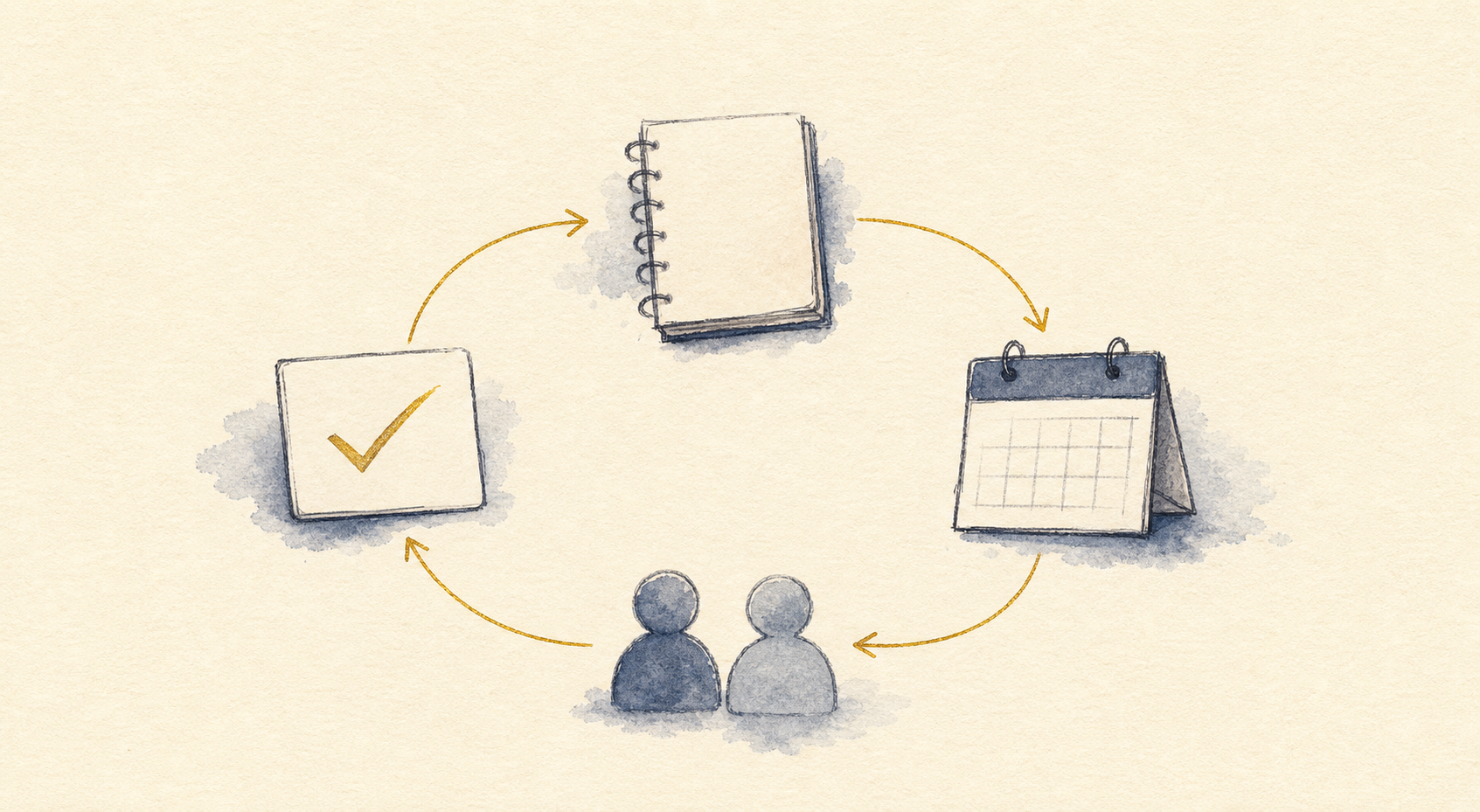
Why this matters
Most client engagement systems are bought with more optimism than they deserve.
The demo looks useful. The templates look polished. The dashboard suggests a future where every client receives the right message at the right time and every adviser glides through the day with slightly heroic calm.
Then the real week begins.
The adviser has client calls, admin, market noise, internal meetings, compliance checks, inbox drift, and a few awkward things that did not fit the workflow. The engagement system becomes another place to look, another prompt to dismiss, another tool that technically works but does not quite earn its spot.
Adoption is not a nice-to-have here. It is the first proof that the system is real.
Worked example
The current wealth-tech research keeps pointing at the same opportunity. Wipfli’s 2026 wealth-management survey says digital customer engagement, data analytics, and automation are top-ranked growth strategies. MSCI’s Wealth Trends 2026 says advisers are thinking about AI through scale, efficiency, personalization, and client engagement. BCG argues AI can automate monitoring, servicing, and parts of engagement in ways that change adviser capacity.
That all sounds promising.
But engagement software does not become useful because the category is attractive. It becomes useful when a specific person knows what to do next.
A client has a liquidity event. A pension transfer stalls. A portfolio drifts. A prospect goes quiet. A review meeting ends with three follow-ups. A client opens a report but does not act. These are the moments where engagement can matter.
The system should start there.
| Weak engagement system | Useful engagement system |
|---|---|
| Starts from campaigns | Starts from client moments |
| Adds another dashboard | Fits an adviser routine |
| Measures activity | Helps create a better next action |
| Assumes more automation is better | Separates drafting, review, and sending |
This is where AI can help, but only if the workflow is already honest.
AI can draft a follow-up, summarize a meeting, suggest a next step, or surface a client pattern. It can reduce admin. It can make a smaller team feel less stretched. But if the adviser does not trust the trigger, the suggestion, or the compliance boundary, the prompt becomes noise.
Client engagement is not the number of touches. It is whether the next interaction feels timely, relevant, and worth the client’s attention.
That is a harder bar than campaign volume.
Limitations / not a fit
Some advisory models are deeply bespoke. A highly manual, white-glove practice may not want a standardized engagement engine beyond basic reminders and record keeping. Some clients also do not want constant digital contact. More messages can easily become less trust.
The first version should therefore be deliberately small.
Pick one client moment. Pick one adviser action. Pick one useful piece of context. Decide what the system is allowed to draft and what still needs human review. Then test whether the adviser would actually use it during a busy week.
The mistake is to begin with a library of templates and call that engagement.
Templates are useful only after the moment is clear.
If a system helps advisers notice the right moment, prepare the right action, and communicate with less friction, it earns its place. If it mostly creates a second inbox with nicer fonts, it will slowly be avoided.
Wealth is still a trust business.
The engagement layer should remember that.
Sources
- Wipfli: State of the Wealth Management Industry 2026
- MSCI: Wealth Trends 2026
- BCG: AI and the Future Economics of Wealth Management